- Currency
- lari (GEL)
- 1 lari
- 100 tetri
- Only legal tender since
- 2 Oct 1995
- Official rate
- nbg.gov.ge
- Declare cash over
- 30,000 GEL
- NBG exchange hotline
- 2 406 406
This page is about money in Georgia the country, not the US state. Checked on 20 November 2026.
The Georgian lari: Georgia's currency, tetri and coins
GEL is the code of the lari, the national money.
History. The lari went into circulation on 25 September 1995, and on 2 October 1995 it became the country's only legal tender.
The names. Lari is an old Georgian word denoting "a hoard, or property". The name of the smaller unit, one-hundredth of a lari, is also an ancient Georgian monetary term.
What the central bank shows. Its website pictures the coins in circulation; one of them, made of stainless steel, is marked "Issued 1995".
Can you pay in dollars or euros in Georgia?
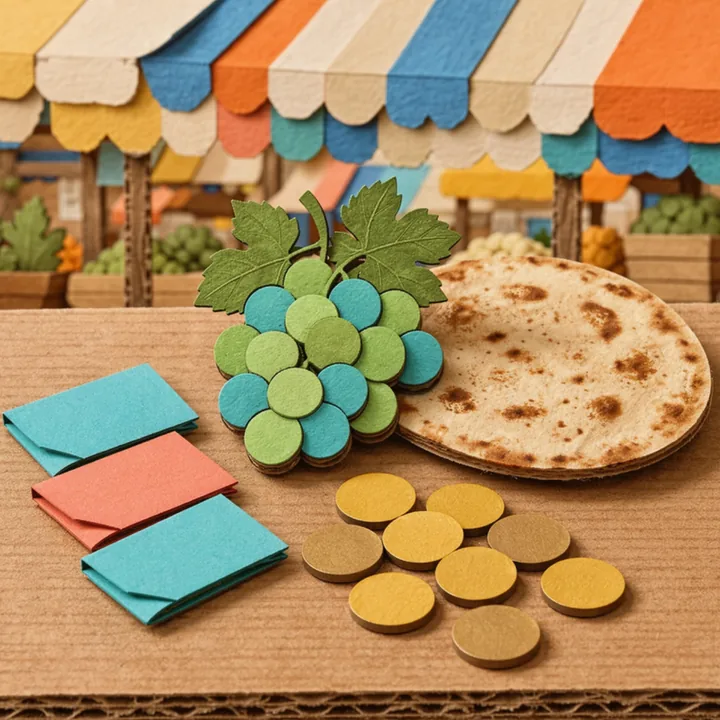
Not at the till. GOV.UK puts it plainly: "Prices may be quoted in US dollars and euros, but goods and services must be paid for in local currency (lari)." The same advice adds: "Travellers' cheques are rarely accepted."
Our tip: if a price is in dollars or euros, ask what it is in lari before you pay, and agree on that number.
Lari exchange rate: where to check the official rate
The National Bank of Georgia publishes the official rate in its Currency rates table on nbg.gov.ge. We do not print a figure on this page: open the table on the day you change money.
A guide, not a price. In the bank's own words, the official exchange rate "is an indicative rate", and "its use is not obligatory except for instances set by the relevant legal requirements". So the rate on a board may differ from it. Treat the National Bank of Georgia exchange rate as a yardstick, and compare every board with it.
Our tip: before you change money, open the official table on your phone and compare it with the rate on the board.
Cash or card in Georgia?
Carry both, and do not rely on plastic alone once you are outside the big towns. GOV.UK warns: "Outside major towns, you may not find ATMs or be able to use credit and debit cards." The Government of Canada adds that "Credit cards may not be widely accepted in rural areas" and advises: "Make sure you have cash at all times for payment".
Can you use a credit or debit card in Georgia, then? The sources we checked do not say how widely they are taken in the towns, only that outside them you may not be able to use one. So plan each day of the trip around where you will be, not around what works in the capital.
Getting around. Paying for the metro and buses with a bank card is covered in our Tbilisi Metro guide.
Our tip: keep two ways to pay in two different places, so one lost wallet does not leave you stuck.

Going to the mountains or villages: take cash in lari
Take enough cash in lari if you travel to rural or remote areas. For a real example of a region where you cannot withdraw money, see the supplies list in our Tusheti guide.
How much cash to bring. The sources we checked name no sum, so neither do we.
Medical care is thin there too. In rural areas there are shortages of medical supplies and personnel. When a clinic may ask you to pay is covered in paying for medical care below.
Our tip: withdraw enough in a city before the road to the villages, with some to spare for the unexpected.

ATMs in Georgia: how to withdraw lari safely
The Government of Canada advises you to "use ATMs located in well-lit public areas or inside a bank or business", to "cover the keypad with one hand when entering your PIN" and to "avoid using card readers with an irregular or unusual feature".
Fees and limits. We do not list them: no official source we checked gives them for travellers. Read the screen before you confirm, and if it offers a conversion, see how to handle a conversion offer below.
Our tip: withdraw in daylight and put the money away before you step back from the machine.
Pay in lari, not your home currency: dynamic currency conversion
Dynamic currency conversion (DCC) means that, abroad, a shop or a bank machine offers to charge you in your home currency instead of the local one. Visa explains that this option "includes exchange rate and additional fees".
What an honest offer looks like. The screen should show the amount in both currencies, the rate used and any additional fees, and let you accept or decline; the merchant must not choose for you.
If something is wrong. If the details are missing or you feel pressured, Visa recommends that you "decline the currency conversion offer and report the incident to your card issuer". Saying no to DCC "will not impact your ability to make purchases or withdraw cash internationally".
Our tip: choose lari. Say "lari" before the cashier presses anything, and look at the screen yourself.

Currency exchange in Tbilisi and the rest of Georgia
Change money only at a registered exchange office and always ask for a receipt: the National Bank of Georgia gave this advice in a warning of 4 November 2022. It registers these offices and says that operating one without registration breaks the law and may lead to liability, including criminal liability. Stay away from unlicensed facilities.
Find a registered office. The central bank publishes the list and coordinates of currency exchange units on its website.
Check the rate. Before any lari exchange, compare the board with the official table (see where to check the official rate). It is only indicative, so the board may differ.
Report a problem. Call the NBG hotline on 2 406 406 or write to cp@nbg.gov.ge.
Arriving by air? What you find in the arrivals hall is in Tbilisi Airport Arrival.
Our tip: count the notes at the window before you walk away.

Money scams in Georgia and how to avoid them
Official travel advice for Georgia describes several money scams: card fraud, high bills in bars and nightclubs, and fake romances online. Each has a simple defence, set out below.
Card and ATM fraud
Official advice says credit and debit card fraud happens in Georgia, including at bank machines. Keep three points in mind:
- Watch closely whenever someone else is handling your card.
- Check your account statements for unauthorized transactions.
- Remember that criminals can compromise public Wi-Fi networks to steal personal data or payment details.
Our tip: keep your bank's phone number apart from your wallet, so you can call the bank fast if something goes wrong.

High bills in bars and nightclubs
After ordering expensive food and drinks, tourists have been forced to pay high bills. Official advice is simple:
- Confirm the price of each item before you order.
- Do not leave an open tab at bars and nightclubs.
- Do not give your credit card to bar or restaurant staff.
- Check your bill for accuracy before paying.
There have also been reports of drink spiking in Georgia. How to keep your drink safe, and what to do about the bill, is in Is Georgia Safe to Travel in 2026?
Exchange offices and online scams
Use only registered exchange offices, never unlicensed ones, as set out in changing money.
Romance scams on dating sites or through social media have occurred.
Our tip: never send money to someone you have only met online.
Paying a doctor or a pharmacy in Georgia: keep cash ready
Expect to pay on the spot. The Government of Canada warns: "Medical services can be expensive, and immediate up-front cash payment is often required."
GOV.UK puts it this way: "You or your travel insurer will need to pay for all treatment as it's provided." It adds that medical facilities in Tbilisi are available but can be expensive, and that outside Tbilisi they are limited.
What it means for your wallet. Outside major towns you may have nowhere to withdraw money, so take what you might need for medical care with you.
Pharmacies. The sources we checked say nothing about paying in pharmacies.
Prices. See what a doctor's appointment costs in Tbilisi.
Ambulance and medicines. Who pays for the ambulance and the hospital is in Ambulance in Georgia; medicines are covered in Bringing Medication to Georgia.
Our tip: keep some lari for medicines as well, especially outside the cities, and keep every receipt from a clinic.

Bringing cash into Georgia: declare over 30,000 GEL
Large sums must be declared at the border. Georgia's Revenue Service says that cash (national or foreign currency), cheques and securities worth more than 30,000 GEL in total, or its equivalent, must be declared when you enter or leave Georgia. Local and foreign money count together towards that total.
Official travel advice gives the same threshold and warns that failure to comply could result in fines and confiscation.
The Revenue Service brochure carries no date. Our tip: check the rule again before you travel with large sums.
Frequently asked questions
What is the currency of Georgia?
Do they accept euros or dollars in Georgia?
What is the best currency to take to Georgia?
Where can I get the best exchange rate in Tbilisi?
Should I use an ATM at the airport?
Is it better to use cash or card in Georgia?
How much cash can I bring into Georgia?
Sources
- National Bank of Georgia: commemorative coins for the 30th anniversary of the lari, 2 June 2025 ↑
- National Bank of Georgia: the Georgian lari ↑
- National Bank of Georgia: coins ↑
- National Bank of Georgia: currency rates ↑
- National Bank of Georgia: warning notice, 4 November 2022 ↑
- National Bank of Georgia: non-bank institutions, list of currency exchange units ↑
- Government of Canada: travel advice for Georgia ↑
- GOV.UK travel advice for Georgia: safety and security ↑
- GOV.UK travel advice for Georgia: health ↑
- Visa: dynamic currency conversion ↑
- Revenue Service of Georgia: what you must know when crossing the customs borders of Georgia, p. 4 (PDF) ↑
This guide is general information, not medical advice: the doctor decides on your care.