- Stalin Museum founded
- 1937
- Distance from the capital
- about 80 km
- By road from the capital
- about 1 h 10 min
- Fortress first recorded
- 13th century
- Uplistsikhe from Gori
- 10 km east
- Emergency number
- 112
This page is about Georgia the country, not the US state, and is part of the Georgia Travel Guide. Checked on 22 November 2026.
Where is Gori, Georgia, and what is it famous for?
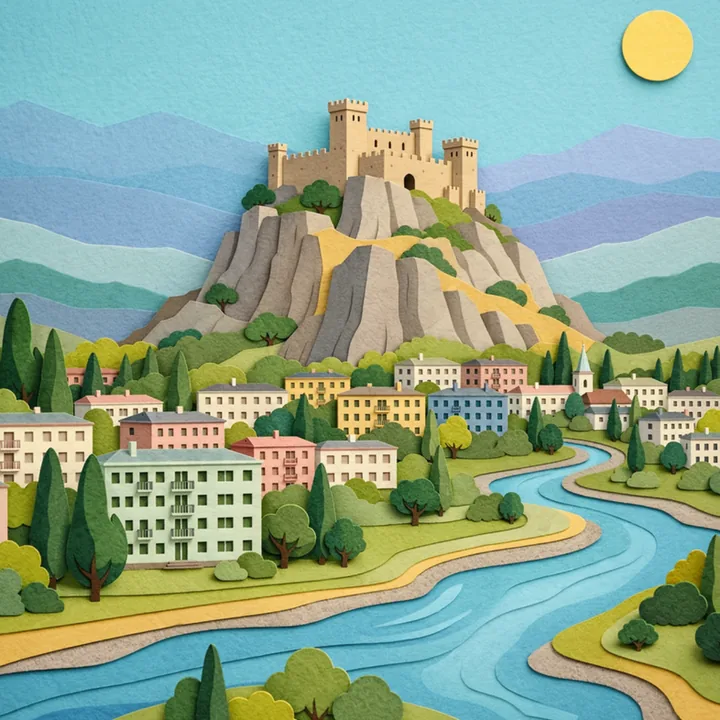
Gori is a town in Shida Kartli, about 80 km west of the capital. It is known as Stalin's birthplace and for the fortress on a high rocky hill in the town centre.
Gori City Hall, the municipality's official site, says the settlement appears in historical sources from the 7th century and was declared a city in 1801. The wider municipality covers 1,352 km², with one city and 120 villages. Of its 330 cultural heritage sites, 53 are in the town itself.
Georgia's National Tourism Administration (georgia.travel) mentions about 50,000 residents and says an earthquake in 1920 destroyed all of the older buildings.
Gori City Hall says the Russian-Georgian war of August 2008 inflicted significant damage on Gori Municipality.
Is Gori safe with South Ossetia nearby?
Travellers come to the town for the museum and the hill. The UK Foreign Office advises against all travel to the Russian-occupied region of South Ossetia, and we found no official figure for the distance from the town to the line. Our tip. Do not drive towards the line, and stay on the routes you planned.
The Government of Canada advises avoiding all travel within 5 km of the line, except on the E60 highway. It warns that the boundaries "are not well defined and change frequently" and that "You could be detained and arrested if you cross into these regions, even by mistake". The UK government notes that consular support is not available in South Ossetia.
More on this in Gori and the South Ossetia line and in Is Georgia safe? Where not to go.
Things to do in Gori in one day (and in what order in summer)
Besides the sights below, the town also has a historical and ethnographic museum.
Our tip. The museum, the fortress and Uplistsikhe, 10 km east, fit into one day trip from Tbilisi. Plan the order around the sun:
- the hill first thing in the morning, while the stone is still cool;
- the exhibition halls at midday, when you want a roof over your head;
- the cave town in the late afternoon;
- drinks bought in town before the climb, not after.
Stalin Museum in Gori: the birth house, the carriage and the exhibition
According to Gori City Hall, "The Museum of the Soviet Leader, Joseph Stalin, was established in Gori in 1937", and it draws more visitors than any other in the country.

The complex has three parts, the City Hall says:
The birth house. The memorial house where Stalin was born stands within the complex.
The exhibition building. It holds tens of thousands of exhibits. georgia.travel lists six halls: his life before and during the revolution, the USSR in 1925–1940, photographs, a bronze death mask, gifts, and a copy of his office from 1918–1922. A seventh hall, with exhibits from the period of repression, was added in 2010.
The railway carriage. It was Stalin's own, and the City Hall says he used it to travel to the conferences in Tehran, Yalta and Potsdam.
Is the Stalin Museum worth it? Tickets, hours and a hot day
That depends on how interested you are in Soviet history. The halls cover his life and the Soviet years, and since 2010 also the period of repression.
The museum's own website lists its opening hours and ticket prices; the hours are shorter from 1 November to 1 April. Check them there before you go.
Our tip. At midday the halls are a good place to get out of the sun. Bring a drink. If you feel unwell inside, sit down and ask the staff for help; if it gets worse, call the emergency number.
Gori Fortress: the climb up the hill in the sun
Gori Fortress, or Goris Tsikhe, stands in the centre of town on a high rocky hill. It first appears in records from the 13th century, and there were fortifications on the site from the last centuries BC, Gori City Hall says. georgia.travel calls it a popular viewpoint.

We found no official figures for the climb. Its length, the time it takes, the height gain, and whether there is shade or anything to drink on top are not published.
Our tip. For the climb:
- go up in the morning or in the late afternoon, not at midday;
- take at least one bottle each to drink, and a hat;
- wear shoes with a ridged sole: the stone can be smooth and slippery;
- hold children by the hand near the walls and the drops;
- if you feel dizzy or sick or get a headache, get into the shade, drink and do not climb further.
The warning signs to watch for in strong sun are in Georgia in summer: heat, UV and storms. For a twisted ankle on the stones, see what to do about sprains and blisters.
Gori weather in summer: heat, sun and water
We found no official climate norms for Gori, such as average July or January temperatures. We do not carry over figures for the capital, because they describe another place. Check the forecast on the day you go.
Our tip.
- Set off early and do the outdoor part of the day first.
- The hill and the cave town are the most exposed places on this trip, so plan shade breaks.
- Wear sunscreen and a hat, and drink before you feel thirsty.
- Do not leave children, or your drinks, in a parked car or minibus in the sun.
The advice in the Tbilisi guide works for this town too.

Drinking water in Gori: what to buy before the climb
We found no data on the town's mains supply, so we make no claim about it. The UK government's travel advice says water quality varies in Georgia and bottled water is widely available.
More in Bottled water and Borjomi.
Our tip. Buy bottles in town before you climb the hill: we found no information on anything for sale on top.
Tbilisi to Gori: train, marshrutka or car
georgia.travel puts Gori about 80 km west of Tbilisi, about 1 h 10 min by road. You can get there by rail, by minibus or by car.

Is there a train from Tbilisi to Gori?
We could not confirm it from the official timetable. The general timetable on railway.ge shows only start and end stations, such as the capital to Batumi, Borjomi, Zugdidi, Poti or Ozurgeti, so Gori does not appear in it as a stop.
Check the stop in Gori when you buy your ticket, or ask at the station before you board. Station names are explained in Train stations in the capital and Batumi; the same guide covers how warm it gets on board.
By marshrutka or car: what official advice says about the road
We found no official timetable or fare for minibuses between Tbilisi and Gori, so we give none.
The Government of Canada warns: "Fatal accidents are frequent and are one of the main causes of death in Georgia". The UK government's travel advice adds that roads outside city centres are often badly lit and poor quality.
See What official advice says about marshrutkas and Georgia roads: what to expect.
Our tip. Wear a seat belt if there is one. Start back while it is still light. Keep a drink with you in the heat. If you get travel sick, read Motion sickness on mountain roads before you go.
Uplistsikhe and other places near Gori
Uplistsikhe, which Gori City Hall calls an open-air museum, is 10 km east of the town on the left bank of the Mtkvari River. The cave town has its own guide. For another day trip from the capital, see Mtskheta.
Street dogs and rabies in Gori
According to the Government of Canada, rabies is present in Georgia and is carried by dogs and some wildlife, including bats; it advises avoiding contact with animals, including free-roaming ones. The World Health Organization says dogs are responsible for up to 99% of human cases. We have no figures for the town itself.
If you are bitten or scratched, wash the wound with soap and water for at least 15 minutes, the WHO advises; the Government of Canada gives about 15. Then get medical attention immediately, as the UK government advises; it adds that rabies treatment is available in the capital and major towns.

The steps are set out in What to do after a dog bite or scratch, and the bigger picture in Stray dogs across Georgia.
Our tip. Do not feed or pet free-roaming animals, do not run, and keep children close.
Medical help in Gori: 112, ambulance and clinics
In an emergency, call the emergency number and ask for an ambulance, the UK government's travel advice says. The Government of Canada adds that rural areas have shortages of medical supplies and personnel, that medical services can be expensive, and that immediate up-front cash payment is often required.
Calling 112 in Gori
It is the single emergency number. Since 2012 it has taken calls 24/7 across the whole country, in Georgian, English, Azerbaijani, Armenian, Turkish and Russian. The Government of Canada also mentions an app, "112 Georgia", in English.
Our tip. Say the name of the town first, then where you are: at the museum, on the hill, or on the road and which way you were heading. Say how many of you there are and what happened. On the hill, if you can, get down to a street the ambulance can reach. More in What to tell the operator.

Is there a hospital in Gori?
Gori has clinics, but the Ministry of Health list of hospitals was not checked for this guide, so none is named here. Our tip. In an emergency, call the ambulance rather than looking for a hospital on your own.
The catalogue of clinics in Gori on 100doc.ge listed 11 clinics on 22 November 2026.
Since 1 January 2026, tourists entering Georgia need health insurance of at least 30,000 GEL for their stay, under Resolution No. 602 of the Government of Georgia. What the rule asks of you is explained in Insurance to enter Georgia.
Frequently asked questions
How do I get to Gori from Tbilisi?
What is Gori famous for?
Was Joseph Stalin from Georgia?
What time of day should I visit the Stalin Museum?
Our tip: at midday, when the halls are out of the sun. Climb the hill in the morning instead.
How much is a ticket, and what are the opening hours?
The museum's website lists both, and the hours are shorter in winter. Check them before you go.
Does the train stop in Gori?
Is it hot in Gori in summer?
We found no official climate figures. Climb early, carry a drink and a hat, and check the forecast.
Sources
- Georgian National Tourism Administration: Gori ↑
- Gori City Hall: Tourism ↑
- Gori City Hall: History ↑
- World Health Organization: rabies fact sheet ↑
- GOV.UK travel advice: health ↑
- 112 Georgia: languages and service ↑
- Gori City Hall: About the municipality ↑
- GOV.UK travel advice: warnings and insurance ↑
- Government of Canada: travel advice for Georgia (last updated 27 August 2026) ↑
- GOV.UK travel advice: regional risks ↑
- Georgian National Tourism Administration: the Stalin Museum in Gori ↑
- Stalin State Museum: working hours ↑
- Georgian Railway: traffic general schedule ↑
- GOV.UK travel advice: safety and security ↑
- Legislative Herald of Georgia: Resolution No. 602 (Georgian) ↑
This guide is general information, not medical advice: the doctor decides on your care.