






































Emergencies
112
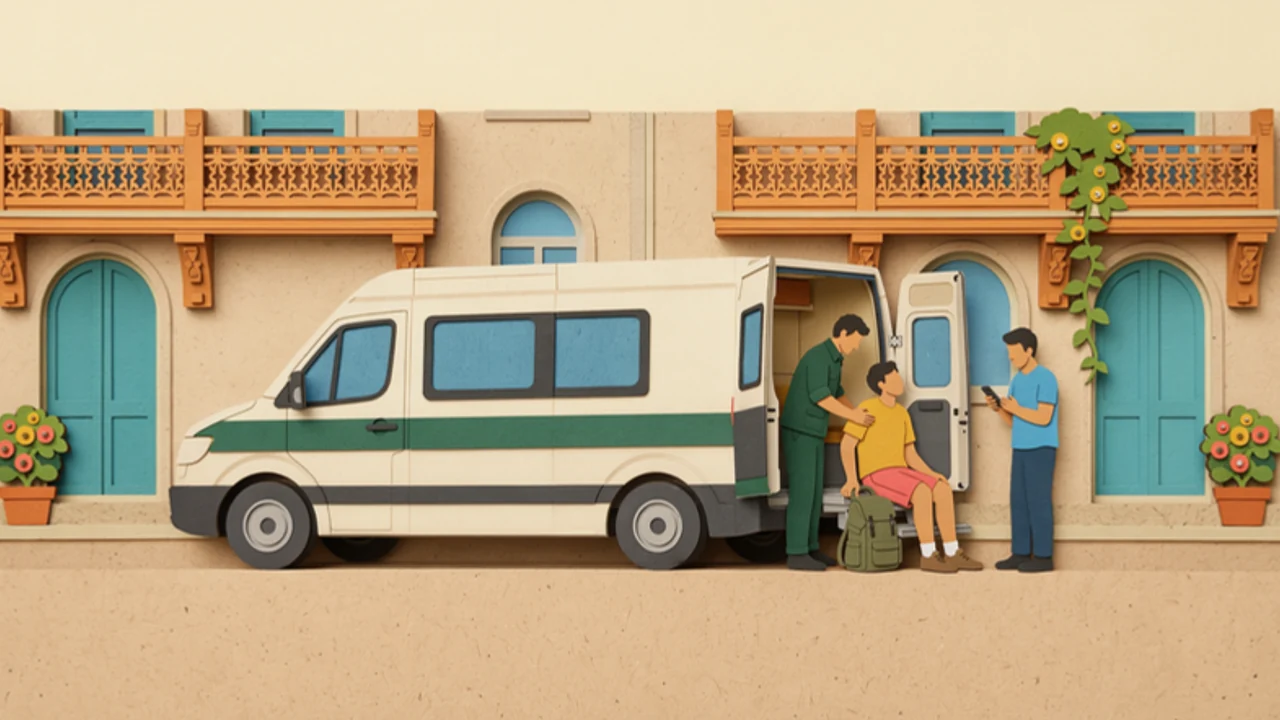
112 is Georgia's single emergency number for ambulance, police and fire. Say that you need an ambulance and give your address. Call-takers handle calls in Georgian, English, Russian, Turkish, Armenian and Azerbaijani.
- If you have insurance, call your insurer's assistance line as soon as you can. Some policies only pay if the insurer was told about the case and approved the clinic.
- Keep your passport (or a photo of it) and your policy number with you. Clinics will ask for both.
- Save your exact address in Georgian or Latin letters on your phone. It helps the dispatcher and the driver.
Step by step, with what to say on the phone and who pays afterwards: how to call an ambulance in Georgia.
Insurance to enter Georgia (2026 rule)
Since 1 January 2026, visitors entering Georgia must hold valid health and accident insurance. The rule comes from the Law of Georgia "On Tourism" and Government Resolution No. 602 of 26 December 2025. Travellers without a valid policy can be refused entry.
- Sum insured of at least 30,000 GEL.
- Valid for the whole stay, including the day you arrive and the day you leave.
- Issued in Georgian or English, on paper or in electronic form.
- It can come from a Georgian or a foreign insurer, as long as the document shows the parties, the covered territory, the dates, the insured risks, the sum insured and the premium.
Who is exempt: holders of diplomatic or special visas and passports, accredited staff of diplomatic missions and international organisations with their families, people entering under specific international treaties, and drivers in international freight and passenger transport.
Public vs private care
Georgia's state Universal Healthcare Programme was introduced in 2013 and is built for Georgian citizens, plus some protected groups such as refugees and stateless persons. Visitors are not covered by it. Most other foreigners, including digital nomads and many people living in Georgia, pay for care themselves or through private insurance.
- Private clinics in Tbilisi, Batumi and Kutaisi are where most expats go. Many have English- or Russian-speaking doctors and modern diagnostics.
- Payment is usually upfront, unless your insurer has a direct billing agreement with the clinic.
- Outside the big cities the choice is limited. For anything serious, people usually travel to Tbilisi or Batumi.
Finding a doctor or clinic
Word of mouth still matters a lot in Georgia, but patient reviews are the fastest way to compare clinics as a newcomer. Before you book, check:
- which languages the doctor actually speaks, not just the reception desk;
- whether the clinic works with your insurer directly or you will need to claim the money back;
- the clinic's opening hours and whether it has a 24-hour emergency department.
Reviews of doctors and clinics in English, Russian and Georgian are collected in a directory of clinics in Tbilisi, with Batumi and Kutaisi covered too.
Living in Georgia long term
The entry rule above is about visitors. If you live in Georgia, a short-term travel policy is rarely the best fit. Georgian insurance companies sell annual health plans to foreigners, often without requiring a residence permit.
- Compare what is covered: outpatient visits, hospital stays, medicines, dental, pre-existing conditions.
- Look at the clinic network. A cheaper plan that excludes the clinics near you is not a saving.
- Read how claims work: direct billing at the clinic, or paying first and sending receipts.
For an overview of local plans and monthly prices, see health insurance plans for residents of Georgia.
Pharmacies and medicines
- Pharmacies (აფთიაქი, aptiaki) are easy to find in every city, and large chains have branches that stay open late or around the clock.
- The legal status of a medicine in Georgia can differ from your home country. A drug that is over the counter at home may need a prescription here, and the other way round.
- If you bring your own medicines, keep them in the original packaging with a copy of the prescription, ideally in English.
What you can bring, which papers you need for codeine or tramadol, and what pharmacies sell without a prescription: bringing medication to Georgia.
Practical tips
- Dog bites and scratches: get medical help the same day because of the risk of rabies — see what to do after a dog bite in Georgia.
- Mountains: altitude sickness is a real risk in places like Gudauri and Kazbegi — see skiing and hiking in Georgia: altitude, injuries and rescue.
- Hiking in summer: vipers are a risk, especially in early summer, and few facilities outside major towns stock anti-venom.
- Keep receipts for every visit and purchase. Insurers will ask for them.
Frequently asked questions
What is the emergency number in Georgia?
112 is the single number for police, fire and ambulance. Call-takers answer in six languages, English among them, and it works from a mobile without a SIM card. More: Ambulance in Georgia: how to call 112.
Do I need travel insurance to enter Georgia?
Yes, since 1 January 2026: a health and accident policy of at least 30,000 GEL covering the whole stay (Government Resolution No 602). More: Arriving at Tbilisi Airport.
Is Georgia safe for tourists?
GOV.UK says crime levels are low. Watch for pickpockets in crowds, and do not go to Abkhazia or South Ossetia. More: Is Georgia safe?
Can I drive in Georgia with my licence?
With a UK licence, yes, for up to one year, says GOV.UK; a car hire company may ask for an international driving permit. In the mountains in winter you need snow tires or chains. More: Driving in Georgia.
How do I get from Tbilisi airport to the city centre?
Bus 337 from in front of arrivals costs 1 GEL, paid by Metro Money or bank card; taxis at the kerb charge a fixed 40 GEL, 20–30 minutes. More: Arriving at Tbilisi Airport.